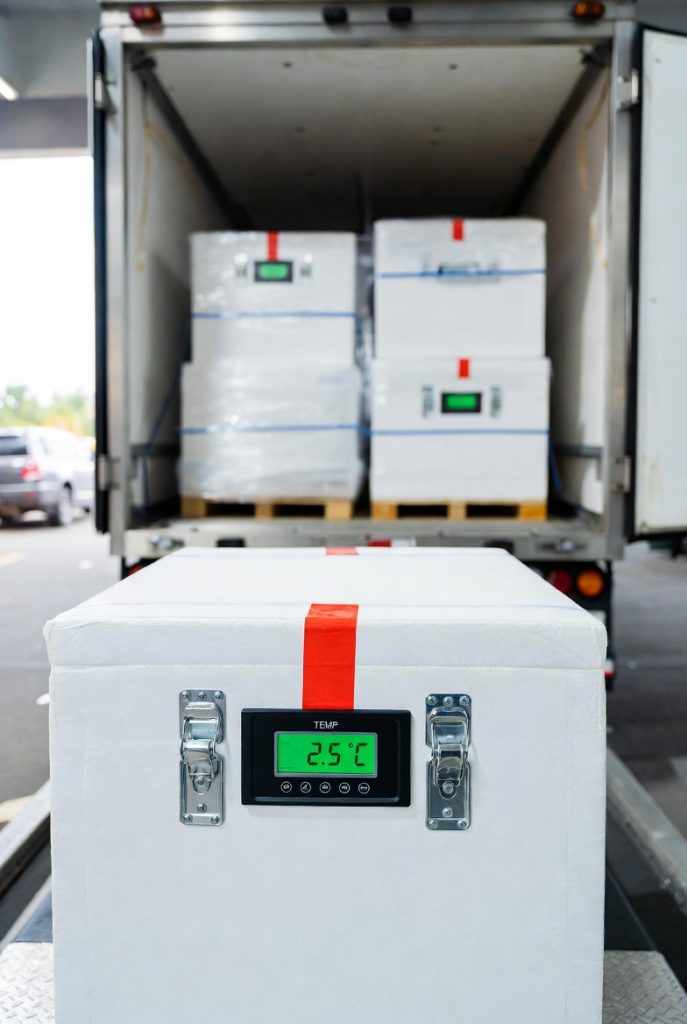
The discussion focuses on temperature-controlled packaging solutions for pharmaceutical transport, primarily distinguishing between passive and active systems.
Passive packaging relies on enhanced thermal insulation combined with cold accumulators (eutectic gels or phase-change materials - PCM). They require no external energy source and are particularly suitable for short- to medium-duration transports (typically 48 to 120 hours, up to 168 hours for top-tier models), small volumes, and last-mile delivery. Their advantages include low initial cost, reduced weight, and ease of use. However, protection duration is limited, monitoring is basic (optional data loggers), and they are often single-use or limited-use, increasing long-term costs. Main suppliers: Sofrigam (France), Pelican BioThermal (Crēdo), Softbox Systems, Tempack, Cryopak.
Active packaging, on the other hand, incorporates a mechanical regulation system (compressor, electric heating/cooling powered by rechargeable batteries). They ensure precise and constant temperature maintenance, even in extreme ambient conditions, for extended durations (120+ hours, often unlimited as long as the battery or power supply is available). They provide advanced real-time monitoring (IoT, GPS, alerts), high redundancy, and strong reusability (thousands of cycles). These solutions are ideal for ultra-sensitive, high-value products such as mRNA vaccines, biologics, cell/gene therapies, or GLP-1 medications, especially during long international air transports. Drawbacks: high initial cost, greater weight, and need for recharging/maintenance. Market leaders: Envirotainer (Sweden, Releye® and E-Tech series), CSafe Global (USA, RAP and RKN series), DoKaSch (Germany, Opticooler®), SkyCell (Switzerland).
Comparative Table of Active vs. Passive Packaging
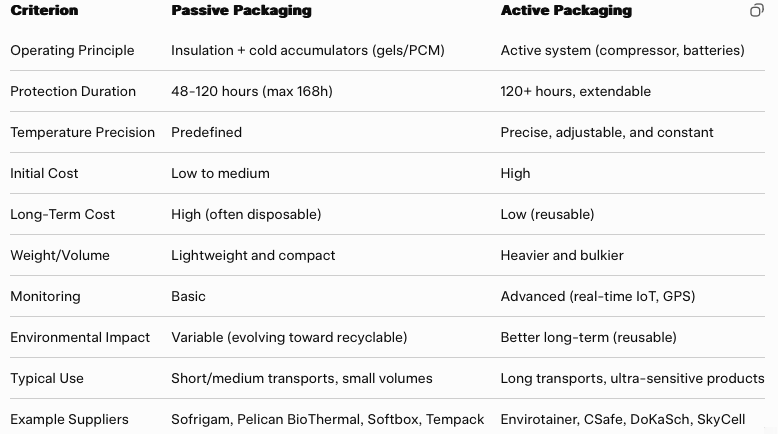
In 2025, trends favor sustainability (increased reusability, bio-based materials, greener batteries), IoT/AI integration, and hybrid solutions. Active systems dominate for critical shipments, while passive remain predominant for standard uses. The optimal choice depends on a transport lane risk analysis.